Civilizations: A Book Club (part 2), feat. Andrew Dana Hudson
In which the Inca discover the “New World”
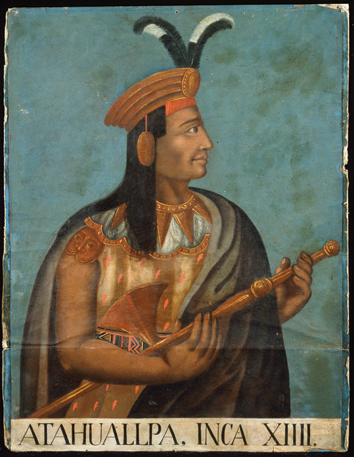
ADH: Welcome back to our month-long, two-person book club in public. Your interlocutors are myself, speculative fiction writer Andrew Dana Hudson (preorder my upcoming novel Absence here), and Lizzie Wade, a Mexico City-based journalist and author of the book APOCALYPSE: How Catastrophe Transformed Our World and Can Forge New Futures and The Antiquarian newsletter. Last week we discussed the first two parts of French author Laurent Binet’s fascinating book Civilizations: A Novel (translated into English by Sam Taylor), which featured errant Vikings spreading germs, steel, and horses throughout the Americas and then Christopher Columbus’s swift defeat at the hands of well armed Cubans. This week we turn our attention to the central figure of the book, the Inca emperor Atahualpa. Spoilers ahead.
In our timeline, Atahualpa was briefly the ruler of the vast Inca empire after winning a civil war against his half-brother Huascar, only to be ambushed and captured by the Spanish conquistador Francisco Pizarro in 1532. The Spanish executed him a year later. It’s a shocking story of a centuries-old political order torn down by a small group of ruthless insurgents.
In Binet’s alternate version, the conquistadors never arrive. The smallpox epidemic, which killed Atahualpa’s father Huayna Capac and his original heir Ninan Cuyochi, was over centuries ago. Instead, they are struck down in an altercation with a red-headed traveler (presumably a descendant of Freydís Eiríksdóttir). Huascar and Atahualpa go on to have their civil war, which sees the latter fleeing north with the former in pursuit. In a journey off the map that somewhat mirrors Freydís’s trip south, Atahualpa and his retinue cross to North America, then craft boats and rafts and launch themselves into the Caribbean.
They land in Cuba, where they are given asylum by the Taínos. They also find out about guns and hear the story of the strange men that had arrived from across the ocean-sea, four decades earlier. With only grim prospects back home, Atahualpa is inspired to refurbish the two rotting Spanish ships on the beach, and build a third, larger vessel, and sail to the east with his generals, servants, llamas, and so forth, as well as the Cuban princess Higuénamota, who grew up chatting with the prisoner Columbus.
I’m so impressed by Binet’s ability to situate us in the sophisticated political and cultural perspective of the Inca here. I imagine it took a lot of research to get right, and it pays off in shaping how we read the contact encounters to come. Lizzie, what did you think of the highly contingent start of Atahualpa’s journey?
Lizzie: One of the many ways structural explanations/excuses for colonialism shape our vision of the past is that we tend to see contact as a story of difference. Technological difference, immunological difference, cultural difference, political difference, economic difference, and eventually racial difference—for 500 years, we’ve been taught that difference was the deciding factor. But what’s actually amazing about contact is how similar everyone was. To a smallpox virus, there was no difference between a European body and an Indigenous body (only bodies that had been exposed to the virus before and bodies that hadn’t, both of which could fall into any other category). The religions were mutually comprehensible as such and quickly began to intertwine. And any political or social organization one side of the world had developed, the other had too—including, crucially to this story, empire.
Atahualpa’s journey north allows for an economical but evocative exploration of both the power and weaknesses of empire, which foreshadows how the Inca emperor will behave in Europe—he’s not afraid of a big swing that changes the rules of the game, like burning Quito or capturing Charles Quint—and also how empire always contains its own resistance and potential downfall. In the case of the Inca, that involves both heirs leaving their seats of power to pursue a personal civil war, as well as passing mention to the damage that unhappily subjugated groups are able to inflict in a time of chaos. Atahualpa’s forces pay the price for past conquest when they are attacked by the Canaris on the way to Quito, but later he’ll learn to wield an empire’s history of oppression in his favor in Spain.
In Binet’s version of the story, Atahualpa was always somewhat of an outsider, too, more connected to Quito than the Inca capital Cusco. I like this vision of some of history’s most consequential actors being people who have become detached from their expected contexts. Where do you go once you’re off the map, and who can you become in a place you don’t belong, because you don’t belong?
Atahualpa goes to Lisbon, where his ships land shortly after a devastating earthquake. The city and surrounding countryside have already been thrown into chaos, so the arrival of strangers from across the Ocean Sea is initially the least of anyone’s worries. It’s a nod to how contact was not an immediate crisis on its own, but rather intersected with all sorts of other preexisting ones (like the Huascar-Atahualpa civil war in our timeline). It amplified some problems, suppressed others, and generally injected even more chaos into whatever was already unpredictable.
The Inca retinue installs itself in a monastery, and the Quitonians start to learn about a strange religion of “the nailed god.” Higuénamota only wears the most necessary clothes (namely Atahualpa’s “bat fur coat,” which I deeply wish I could try on), and again we get an inversion of the sexualized, powerless woman translator—here, her nudity allows her to take charge of situations and relationships because it’s so unsettling to the monks and European public at large, even though she can only sort of understand Portuguese. But when the king of Portugal eventually comes to meet the newcomers, Higuénamota realizes she can understand his Castilian wife, Catalina. And so Atahualpa and company head to Spain.
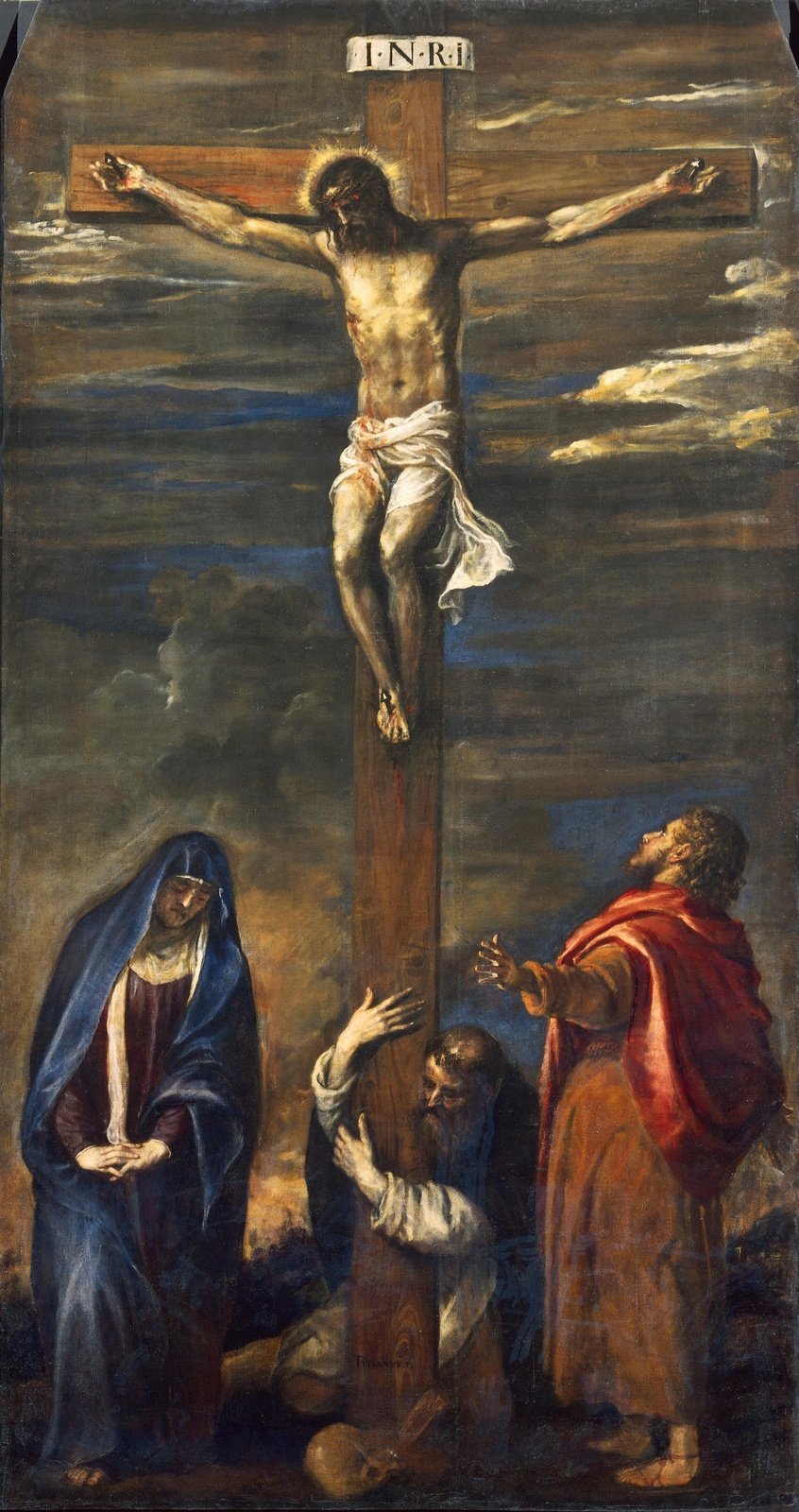
ADH: Well said! These early scenes after the Inca arrive in Europe are super interesting to me for a couple reasons. First, there really was an earthquake and tsunami in Lisbon in 1531, which killed some 30,000 people. As an author, I’m always amazed at how the real world and history are just packed full of wild and highly symbolic events and coincidences that would be too strange for fiction if I made them up but can provide a scaffold of meaning to guide a story. Binet does this really well, using the existing tapestry of life in the 1530s to weave his story into. Sometimes these are even literal tapestries, in the form of references to future Titian paintings depicting some moment of Atahualpa’s journey.
Second, we see very quickly how odd and arbitrary the logics and norms of Christian Europe are to people who are complete outsiders to the Abrahamic tradition. The “nailed god” has no more significance to them than the Inca cult of mummies would have had to one of our timeline’s conquistadors. They see the Inquisition burn a man at the stake and don’t understand why people would worship a god who demands such brutal sacrifices. They don’t get why the locals, particularly monks, are so freaked out by female nudity. They have to piece together the mythology and the violent divisions between the sects of the Abrahamic religions from scraps.
You’d think this would put them at a disadvantage, and in some ways it does, but, because they don’t share Christian pieties, it also allows them to act orthogonally, to think outside the box. At one point, after they find out that the local Inquisition plans to arrest them, the Inca decide to massacre the whole town of Toledo, sparing only those who do not make the sign of the cross.
Binet’s work here points to what I think of as a first mover advantage. Sort of the opposite of a home field advantage, applied to these first contact scenarios. Everyone in Europe is constrained by social ties, by cultural and religious norms, by obligations to the web of feudal allegiances in which every king and lord in Europe is cousin or in-law to every other. Everyone has an economy to think of. Everyone knows how militarily or politically strong everyone else is, and so can choose to pray only on weaker foes. Everyone, that is, except Atahualpa and the Quitonians. They’re sort of playing checkers, while everyone else is playing chess. It might seem like a less sophisticated game, but it means that their pieces can hop across the board, breaking the expected rules.
Which of course is exactly the situation the European conquistadors found themselves in when invading the Indigenous societies of the Americas. Probably this was key to their success.
I think we can most clearly see these parallels Binet is drawing in the capture of Holy Roman Emperor and King of Spain Charles V (referred to in the text as Charles Quint), from the midst of his whole huge army, by Atahualpa’s tiny band. It’s a scene that mirrors the ambush at Cajamarca where, in our history, Francisco Pizarro takes Atahualpa hostage, thus precipitating the collapse of the Inca empire. In both battles, the foreigners are vastly outnumbered. In both battles, the foreigners rush for the monarch on horseback. (I love the line on page 113 about how “The Quitonians’ ancient equestrian tradition had made them exceptional horsemen.” Exactly the sort of thing that makes Alternate History so fun.) In both battles, the local troops’ focus on protecting their king made them less effective at actually defeating the foreigners. In both battles, the leader of the insurgents—Pizarro in our timeline, Atahualpa in Binet’s—has to take extreme action to prevent his own men from killing the enemy monarch, because their only hope of survival is taking him alive. In both cases, the plan that is “so crazy it just might work” works.
What do you think of my “first mover advantage” theory? And of Binet’s historical mirroring?
Lizzie: There is certainly power in being able to turn over the board because you either don’t understand or don’t care about the rules of the game everyone else thought they were playing. I’m very interested to hear about these historical parallels with the battle of Cajamara, because I know a lot more about the Spanish-Aztec war in Mexico (some of whose characters we’ll meet in the next installment!) than I know about the Spanish-Inca war in Peru.
Somewhat relatedly, I’ve been mulling over an idea I’m calling “the random white guy theory of history.” The colonial “heroes” we tend to think of as the protagonists of contact—Columbus, Cortés, Pizarro, the early Virginia and Plymouth colonists—weren’t anyone special. They weren’t more clever, more sophisticated, or even necessarily more adventurous than their contemporaries. Cortés and Pizarro didn’t take down empires because they were generational military geniuses who flawlessly executed brilliant strategies. Their power came from creating, and taking advantage of, chaos—sometimes on purpose, often by accident. (I’ve been particularly inspired by the work of historian Matthew Restall here, whose Seven Myths of the Spanish Conquest whose is a must-read, and whose latest is The Nine Lives of Christopher Columbus.)
But the Random White Guys also had a force even more powerful than chaos on their side. They had allies, drawn from the Mexica and Inca empires’ subjugated and marginalized peoples. In Mexico, for example, the republic of Tlaxcallan had resisted incorporation by the Aztecs for a century before Europeans arrived. The Tlaxcalteca saw the foreigners as supporting players or even pawns in their generations-long political struggle. And it paid off for them, at least for a while. Tlaxcallan continued to exist for centuries after Aztec Tenochtitlan fell, reporting directly to the Spanish crown instead of being broken up into oppressive and exploitative encomiendas.
Atahualpa is anything but a random Inca, but he does start to take advantage of the potential allies on offer in Europe when he recruits Spain’s “conversos, Moors, witches, bigamists, fanatics and Lutherans” (pg 93) to his side after sparing them in Toledo. When we learn about colonial history, it can be hard to understand why the Tlaxcalteca and so many others allied with the Europeans. Looking back at the contact period through the funhouse mirror of our current racial categories and the myth of inevitability, it seems like they were acting against their own interests; in Mexican history, the Tlaxcalteca (like the translator Malintzin) are often remembered as traitors. But when Binet layers the same dynamics over sixteenth century Europe, whose outsiders and outcasts we’re already familiar with and more likely to be sympathetic to, it’s much easier to see why Jews, Muslims, Protestants, and those in danger of being accused of witchcraft by the Inquisition would race to ally themselves with a first mover like Atahualpa.
ADH: Yes, such victims of empire, and particularly the insane zealotry of the Spanish Inquisition, have already joined Atahualpa’s band when Charles besieges the Quitonians at Salamanca and ends up captured. There’s a brief period of limbo in which the Inca (and their new followers) hold Charles hostage and move, surrounded by the Spanish army, to a Muslim-built fortress in Granada. Atahualpa very cannily (he’s studied Machiavelli at this point) allows Charles to reunite with his family, receive dignitaries, and basically continue running his empire, and in doing so the Inca come to learn at last about the politics, geography, and religions of the continent—including the prominence of gold and silver in the economy.
This section features one of my favorite passages in the book, beginning at the bottom of page 121, which details the nature of Christian faith, and its distinctions from Islam and Judaism, as understood by the newcomers: “Thus, all [the Christians’] actions were supposedly dictated by their desire to make up for the ingratitude that their ancestors had shown to their god when they tortured him and nailed him to a wooden cross at the top of the mountain in a distant land.” We also see Atahualpa start to soft launch one of his most impactful policy innovations: religious tolerance. He “suggested to Charles that he should enact a law authorising the different cults of practice throughout his kingdom, then simply add to that list the cult of the Sun” (meaning the main religion of the Inca).
Charles laughs, because of course in the 1500s the politics of Europe are all about the Reformation, the aftermath of the Crusades, the slow cracking of Catholic hegemony. And many Christians had, and still have, an eschatological mindset that put the saving of souls for the afterlife/end times above peace for the living. What was common sense to Atahualpa—tamp down on religious strife—is unthinkable for Charles, the Holy Roman Emperor. I’d like to think Atahualpa’s proposal would be common sense to us contemporary people too, but it’s hard to watch the insanity of the war with Iran and not feel that the urge to obliterate other religious cultures is alive and well in our leaders today.
Anyhow this odd period of rule-by-hostage eventually ends when Charles is injured during an escape attempt and dies.
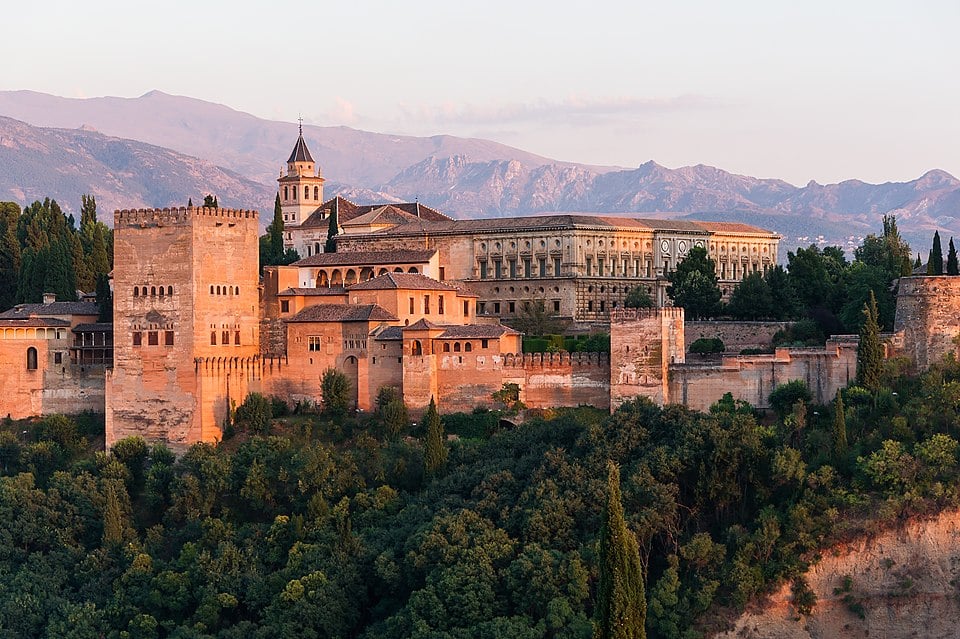
Lizzie: I missed the Cajamarca parallel earlier, but here I saw a mirror between Charles Quint’s fate and the death of Aztec emperor Moctezuma in our timeline. In the book, the Quitonians hold Charles hostage for months in the Alhambra, where he technically continues his duties as the king of Spain, but with Atahualpa and his advisors making the real decisions. This is, more or less, what Cortés and other conquistadors claimed to have done with Moctezuma when they entered Tenochtitlan, although it seems clear in their own writings that Moctezuma had them in a gilded cage. The tables turned eight months in, when Pedro de Alvarado launched a surprise attack during a religious festival and massacred many members of the Aztec nobility. Like the book’s Toledo massacre, it was completely outside the rules everyone else thought they were playing by—arguably even Cortés, who was on the coast dealing with new arrivals from Cuba at the time.
In the chaotic aftermath of the Tenochtitlan massacre, the Spaniards actually did capture Moctezuma. The story goes that he went out on a rooftop to try to calm down the furious people below, and that a projectile launched from the crowd hit him in the head and killed him. I tend to agree with Restall, who argues in his book When Montezuma Met Cortés that the conquistadors murdered Moctezuma and used the city’s understandable panic and unrest to create a cover story. But the truth is, we’ll never really know what happened, or who threw the stone, or if there even was a stone. I don’t know if Binet was thinking of this incident when he wrote the scene of Charles Quint’s attempted escape from the Alhambra, in which he is struck down by an arquebus bullet fired by unknown hands. In the book, the Spaniards blame the Quitonians for their king’s death, but his loss is a disaster for Atahualpa and company. Without Charles Quint under their “care,” the Spaniards have no reason not to attack.
ADH: The Quitonians make a break for it, reduced once again to a fleeing band pursued by a mighty army. When all seems lost, Higuénamota returns from a secret mission with money and weapons from Huascar, and the tide turns. Suddenly Atahualpa isn’t just a random insurgent, but a politician backed by an intercontinental supply chain that gives him access to the might and gold of Tawantinsuyu. It’s one of the last moments of heightened contingency in the book. The rest, as we’ll discuss next week, is all about structure, and how Inca culture might reshape Europe if given the chance to colonize it.
For those reading along, our third and final book club discussion will cover the rest of the book!
Leave a comment Subscribe and don’t miss Part 3!
-
Everyone knows how militarily or politically strong everyone else is, and so can choose to pray only on weaker foes.<<
While I'm assuming this is a homophonic typo, I am delighted by the inadvertent reference to the weaponization of religion. 😃


Add a comment: