How monuments made civilization
And not the other way around
I’m back from this year’s Society for American Archaeology meeting, exhausted and exhilarated in equal measure. One of the things I can’t stop thinking about are some different colored dirts.
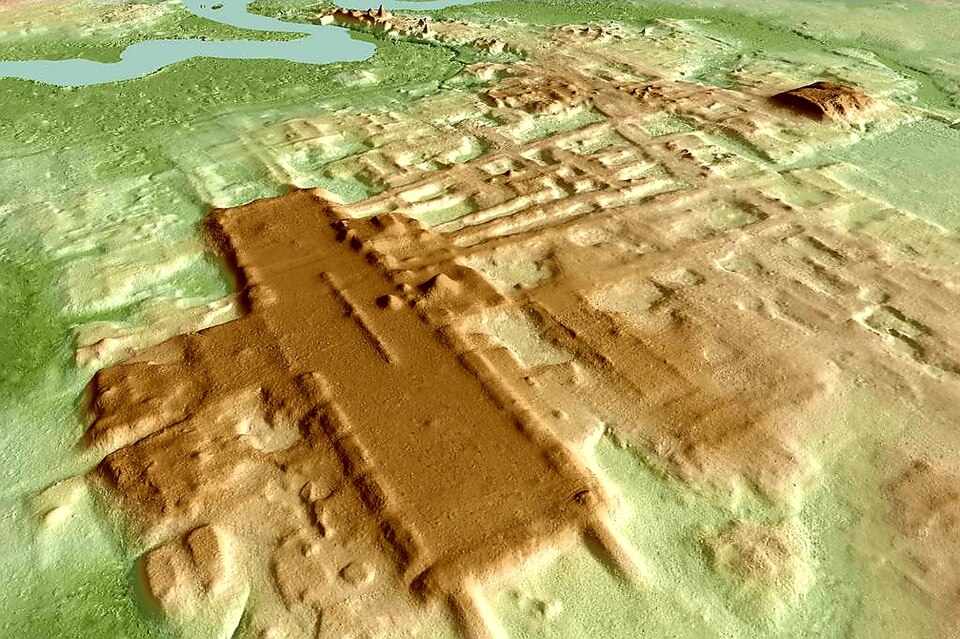
You may have heard of Aguada Fénix, one of the most exciting archaeological discoveries of this decade. It’s an absolutely enormous ceremonial center in Tabasco, Mexico, in the western part of what would become the Maya lowlands, that was first identified in free, low-resolution government lidar maps. It was simply too big to see from the ground; the rectangular earthen plateau at its heart is 1.4 kilometers (almost one mile) long. Aguada Fénix is also shockingly old, built between 1000 and 800 BCE, before people in Mesoamerica had started to live in permanent settlements, use ceramics, depend on agriculture, and (mostly) create social hierarchies.1
The assumption since the beginning of archaeology has been that those things we so associate with “civilization”—farming, sedentary life, hierarchy, communities larger than a few dozen people you know personally—had to predate gigantic monuments. Why would people without rulers to organize them, food they could store and redistribute, and a permanent home to demarcate bother to build places like Aguada Fénix? Even if they had the idea, how could they follow through on it?
But Aguada Fénix is one of many places around the world to show that the monuments—huge, staggering, jaw-dropping monuments—often came first. Before the farming, before the settlements, before the complexity, before the “civilization.” Out of nowhere, all around the world, with no preceding change to their egalitarian and mobile lifestyles, enormous groups of people that might not have otherwise known each other or even spoken the same language suddenly started working together to certain places special. This pattern is no longer a surprise, but I still have trouble wrapping my head around it.
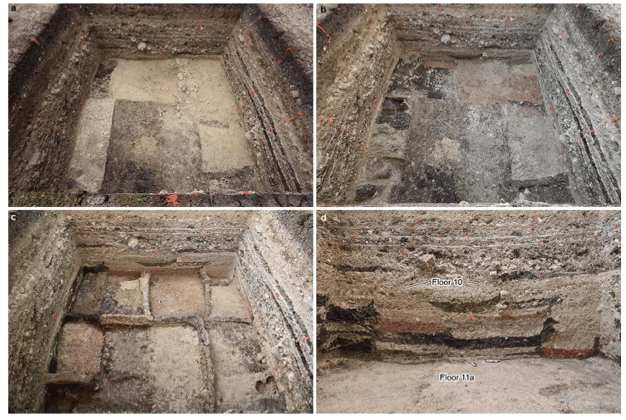
Which brings us to the different colored dirts. Beneath the floor of Aguada Fénix’s main plateau, within the construction fill that made up the bulk of the monument, archaeologists discovered a checkerboard-like pattern of various clays and soils. Each cell was divided from the others by an obvious border, laid down after the fill itself (so the boundaries weren’t supporting the structure). This is quite a specific vision and laborious execution for the internal structure of an earthen monument, which presumably no one would ever see again after it was finished. In her SAA presentation, University of Arizona archaeologist Daniela Triadan proposed that each of these cells was filled in by a different group of people, maybe with a material that meant something to them. The checkerboard fill could have been a manifestation of the various smaller groups that had come together to make Aguada Fénix.
Something clicked for me when I heard this, about all those monuments-before-civilization. A larger, regional or cultural community hadn’t first come together and then decided to build a monument to represent itself, as I had always imagined. Instead, building the monument together made the larger community. Two thousand years ago, at the very beginning of what would become one of the world’s great civilizations, the process of creation and cooperation mattered just as much as, if not more than, the finished product.
Subscribe nowMy writing
Also from the SAAs, I wrote an update about the search for Sac Balam, the second-to-last independent Maya capital that survived for over a century into the colonial period. Long-time readers will remember I went on the first expedition looking for this lost city. After nearly a week of truly harrowing fieldwork, we didn’t find it, but the experience forever changed how I thought about colonialism’s lie of inevitability. Now, seven years later, the team has found a candidate site! Read about it here.
APOCALYPSE update
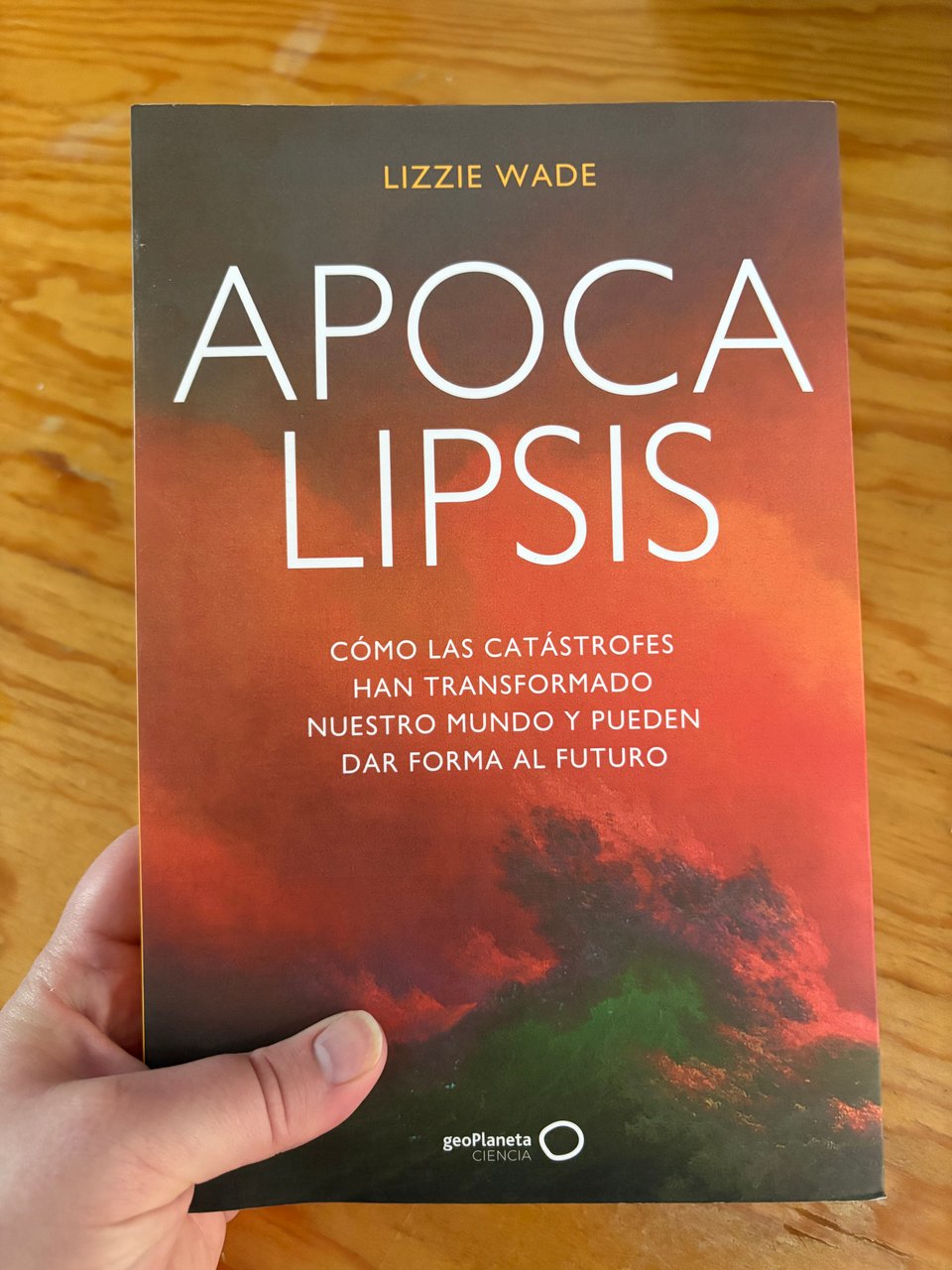
APOCALYPSE turns one year old today, and I’m celebrating with the beautiful Spanish translation, from geoPlaneta! There are many more translations coming but this one means the most to me, and I’m so happy to see it out in the world.
San Lorenzo, the first Olmec center, slightly predates Aguada Fénix has those colossal heads, suggesting the elevation and recognition of some important people, maybe leaders. ↩


Add a comment: