
Meanwhile, at Monte Verde
The peopling archaeologists are fighting again 👀
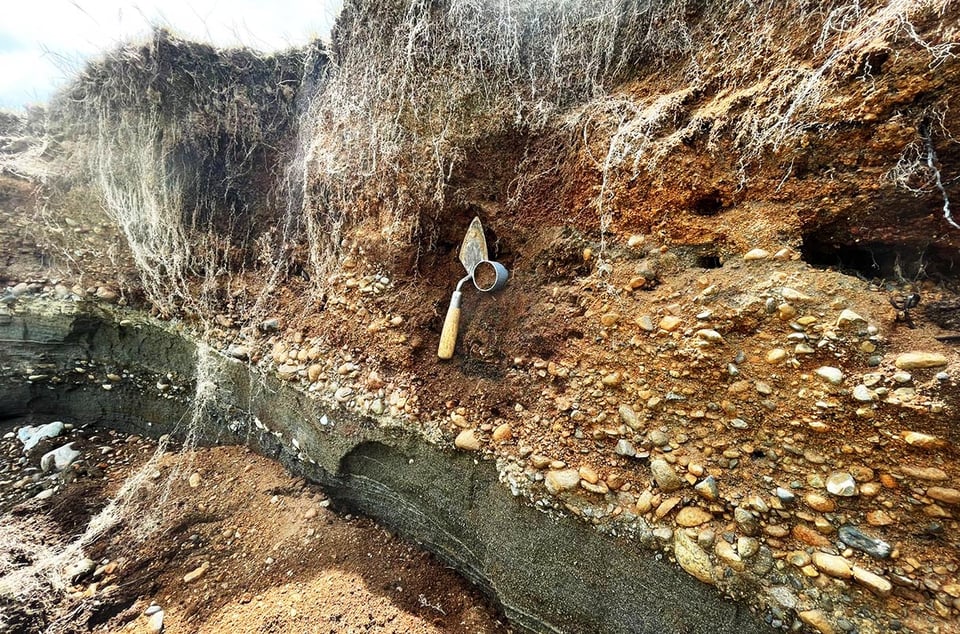
While Andrew Dana Hudson and I were going deep into alternate history and the Inca empire conquering Spain, I also wrote an article about a new paper questioning one of the most well established facts in archaeology: The date of Monte Verde, which the authors claim was occupied only about 8,200 years ago. If you don’t follow archaeology, that sequence of words probably means nothing to you. If you do follow archaeology, you’re screaming, crying, throwing up.
Back in 1997, Monte Verde single-handedly shifted the paradigm of when and how people first arrived in the Americas, and by extension, who those people were. Before that, most archaeologists were certain that the first people in the Americas arrived around 13,500 years ago by walking south through an ice-free corridor that ran between glaciers in Canada. They were big game hunters following their prey, and their telltale artifacts were fluted Clovis spearpoints. But in 1997, a cadre of archaeologists visited Monte Verde, a hunter-gatherer site in southern Chile, and validated its researchers’ claims that people had lived there 14,500 years ago. That was a millennia before the earliest Clovis points, and it meant people lived in the Americas before the ice sheets began to melt. Most archaeologists shifted their thinking to a pre-Clovis peopling model and started to believe the first Americans must have come by boat, hopscotching along the Pacific coast rather than chasing mastodons across newly exposed land.
Almost 30 years later, several other pre-Clovis sites are widely accepted, and robust genetic evidence has come along to support a likely arrival around 16,000 years ago. But the bad feelings of the Clovis wars never really dissipated. Before Monte Verde was accepted, archaeologists who presented pre-Clovis evidence were ridiculed, shouted at, and all but blacklisted as serious researchers. (Heather Pringle wrote about these emotional dynamics and their scientific legacy here, in the late, lamented Hakai Magazine.) Now, archaeologists who have lingering doubts about pre-Clovis sites would say the same thing is happening to them—as, perhaps, would those putting forward much older dates than Monte Verde, most compellingly from the White Sands footprints at 23,000 to 21,000 years ago.
The new paper returns to the original wound, examining the geomorphology of the landscape around Monte Verde to argue that the original dates came from 14,500-year-old wood that got swept into sediments that are actually only about 8,200 years old, at most. Some researchers find this convincing and exciting, but you won’t be surprised to hear that many don’t. (Read the article for why!) I’ve been covering this field long enough to know that one paper in any direction isn’t enough to change anyone’s minds. For my money, peopling of the Americas is the most contentious topic in archaeology, and the mere existence of this paper makes it clear the drama won’t end anytime soon.
Read my Monte Verde story


Add a comment: