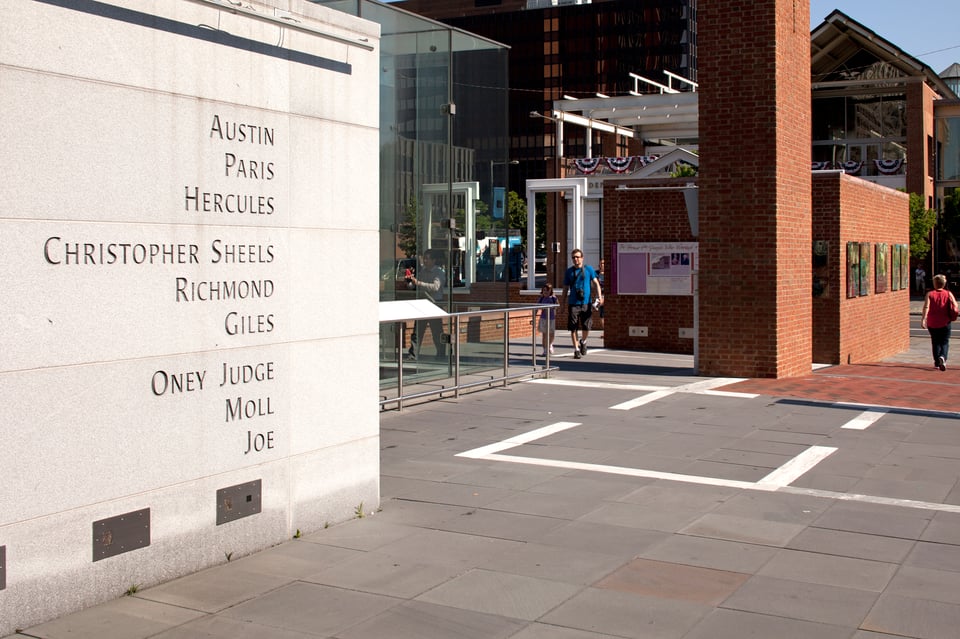
Say their names
Austin, Paris, Hercules, Christopher Sheels, Richmond, Giles, Oney Judge, Moll, and Joe
My apologies for not sending a letter last week; I was sick. Since all my phone rules fly out the window when I’m in bed all day, I’ve been positively marinating in all the horrible news out of the U.S. I always wondered, as apparently the only person paying attention in history class, if I would realize it was time to leave before it was too late. As it turns out, I had already left. I’m so grateful for that, and it feels terrible.
Watching helplessly from afar, unsure if anything we do could possibly make a difference, is how they want us all to feel, and I’m proud to know there are so many people, in Minnesota and elsewhere, who refuse to believe it. (Read that essay, by Winston Hearn.) Apocalypses bring out the worst in people, and they also bring out the best. New worlds can grow from either. I don’t think we can stop this world from ending, but we can still choose which seeds we plant for the next.
That’s why they want to rip out our roots, too, so we can’t learn anything about who we’ve been, and what it means for who we want to become. On January 22, the National Parks Service removed an exhibit about slavery during the nation’s founding from the President’s House Site in Philadelphia’s Independence National Historical Park. Among other things, the exhibit highlighted the lives and identities of nine people enslaved by George Washington while he lived in Philadelphia during his presidency. You can still read about them on the NPS website, for now, or right here, for always:
Austin, the half brother of Ona Judge, worked as a postillion (a horseman) and stable hand. He died on December 20, 1794, after a fall from a horse, leaving a wife and five children.
Christopher Sheels became Washington’s personal attendant as a teenager after his uncle, who was with the general throughout the Revolution, became incapacitated. A literate man, Sheels attempted to escape in 1799, but was unsuccessful. His fate after Martha Washington's 1802 death is unknown.
Giles was a driver, postillion, and stable hand. He returned to Mt. Vernon in 1791, after being injured in an accident during Washington’s tour of the southern states. He died before 1799.
Hercules was the chief cook during Washington’s stay in Philadelphia. He was celebrated for his mastery of his craft and exacting standards for kitchen workers. Accounts differ about his flight to freedom, but Hercules fled from bondage in 1797. Hercules would have been legally freed by the terms of Washington’s will, but his wife and children remained in bondage (they were “dower slaves”).
Joe (Richardson) is mentioned in 1795 records as “Postillion Joe,” although his time in Philadelphia is uncertain. He was married to a woman freed (along with their children) after Washington’s 1799 death, whereupon the family took the name Richardson.
Moll was nursemaid to Martha Washington’s two grandchildren. Before Martha’s marriage and at Mt.Vernon, she had served as nursemaid to Martha’s children.
Ona/Oney Judge was, like her mother, a talented seamstress. She became Martha Washington’s personal maid as a teenager. In 1796, Judge escaped to New Hampshire, where she lived until her 1848 death. In New Hampshire, she married a free black sailor named Jack Staines and had three children, who all died before her.
Paris was a young stable hand. He was returned to Mt. Vernon in 1791 for “unsatisfactory behavior” and died in 1794.
Richmond came to Philadelphia at the age of 11 with his father, Hercules. Although his father was not a dower slave, his mother was, making Richmond and his sisters dower slaves by association. He worked as a scullion in the kitchen for a year, but returned to Mount Vernon.
Philadelphia has sued to reinstate the exhibit, and a federal judge has ordered the removed panels safely stored pending her decision. The names remain engraved on a concrete wall, and people have put up handmade signs reading “learn ALL history” and “Slavery was real.” Denying it can never erase it. We navigate the present using the paths shaped by the palimpsest of the past, whether or not we know—or are allowed to know—what created them and where they lead.
They want us to be so scared of learning hard truths that we close our eyes and choose ignorance. But they are the ones who are scared. They are terrified we will feel rage, sadness, and shame they can’t appropriate to turn us against each other; they live in fear that we might use those feelings to reach out in solidarity instead. History can be painful, it’s true. But our eyes are open, and they are right to be afraid.
March book discussion: Civilizations
Andrew Dana Hudson and I will be doing our next newsletter crossover in March, discussing the book Civilizations by Laurent Binet and translated by Sam Taylor. It’s an alternate history novel in which an Inca emperor conquers Europe. It also has Vikings, Hapsburgs, and human sacrifices in Paris. It’s a rich and fascinating book, and we highly recommend you read it before our discussion. You have a month!
Upcoming APOCALYPSE events
Also in March, come see me talk about my book APOCALYPSE and making the most of the end of the world!
How to Thrive in the Apocalypse
with Lizzie Wade
Climate change, global plagues, state collapse—let’s just say it. We're living through the end of the world. But if we can face the hard truths of the apocalypse, we can use them to cultivate meaningful, consequential lives and build the kinds of societies we need and want. In this talk, Lizzie Wade shares five lessons from her book APOCALYPSE: How Catastrophe Transformed Our World and Can Forge New Futures that show us how to leave behind the world that has failed us and create a better one instead.
March 2 at Wake Forest University
6 p.m, ZSR Library Auditorium
Winston-Salem, North Carolina
March 5 at Winthrop University
7 p.m., Dina’s Place
Rock Hill, South Carolina
If you’re interested in having me give a similar talk at your university, museum, bookstore, or book club, don’t hesitate to get in touch!
Scheduling note
I’m off on a reporting trip later this week. Letters will resume on February 17.


Add a comment: