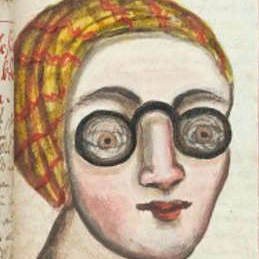
The books that made APOCALYPSE
My subconscious’s bibliography
I’m thrilled to share that The New Yorker selected Apocalypse as a best book of the year! Translation: It’s an especially great gift for all the hard-to-buy-for dads in your life. Click below to order from one of the big guys, or even better, pick up a copy or two from your local bookstore!

In the northern hemisphere, the days are getting shorter, the cozy weeks are imminent, and it’s the perfect time of year to curl up with some melancholy yet stirring tales of worlds past, present, and alternate. I’m duty bound to remind you that my book Apocalypse fits wonderfully in that category, but there are so many others that guided me as I brought it into the world, whether or not I was aware of their presence and influence at the time.
I did a tremendous amount of research reading for Apocalypse, and I’m quite proud of its Selected Bibliography, which retraces my steps but also invites you to use them to set out on your own path, if you’re so inclined. Apocalypse also represents a lifetime of non-research reading, however, and there have been fewer chances to reflect on that. I’m grateful that Geographical magazine gave me one by asking me to compile a “Writer’s Reads” column, which ran in print alongside a review of Apocalypse earlier this year. I’m happy to be able to share it here now, for your holiday reading and gifting needs.
Some of these books I read during the years I was writing and editing Apocalypse, while others I had first enjoyed long before. They aren’t in any particular order. I’m sure you can find traces of all of them in Apocalypse, and they, along with so many others, will be there in everything I write next.
Homegoing by Yaa Gyasi (2016)
A spell-binding novel about how the warp and weft of history is unpredictably yet inextricably woven into the tapestry of the present.
The Lost City of Z by David Grann (2009)
As a journalist covering archaeology, I learned so much from this rip-roaring adventure that finds its most compelling suspense in how and why scientists change their minds.
The Nutmeg’s Curse by Amitav Ghosh (2021)
Living in the era of climate change, I used to think humanity was the worst thing to ever happen to our planet. This book argues against such easy generalizations and uses an almost forgotten moment in history to reveal who the culprits behind our modern crises really are. (More on my change of heart in Slate).
Ghost Wall by Sarah Moss (2019)
I galloped through this short, tense novel about the dangers of trying to touch the past too closely, and the threat that’s all too often carried by the people who want to. (More on Ghost Wall in The Antiquarian)
The Plague by Albert Camus (1947)
As we have emerged from our own time of quarantine into an upside-down world, I’ve carried this line from Camus’s classic close to my heart: “Destruction is an easier, speedier process than reconstruction.”
Piranesi by Susanna Clarke (2020)
I’ll never forget the singular, glowing voice of this novel’s narrator, who uses language, attention, and imagination to transform even the worst tragedies into something magical. (More on Piranesi in The Antiquarian)
Exit West by Mohsin Hamid (2017)
A deft exploration of the fragile, fleeting experience of living through events you know will change everything, but not yet being able to see what’s on the other side. (More on Exit West in The Antiquarian)
The Fifth Season by N.K. Jemisin (2015)
This speculative novel introduces us to a truly original but hauntingly familiar world, where society is defined not by stability but disaster.
Scheduling note
This is The Antiquarian’s last letter of 2025. I’ll be back in your inboxes on January 6, 2026.


Add a comment: