The divide
How far can imagination take you?
At its most fun, writing about archaeology feels like writing speculative fiction. Archaeology focuses on the study of “things,” from pots to buildings, but it uses them to tease out an almost unbelievable amount of information about human identities, relationships, ideas, and decisions, sometimes down to a single moment. (It has really made me reconsider my relationship to my own trash, a topic for a future letter perhaps.) I love imagining the child slipping in the mud and leaving footprints beside a lake, the person making an offering of a beloved object before fleeing a collapsing city, the performers outfitting their puppets with tiny clothes and wigs.
But for every chance to commune through time over the quintessential human experience of delighting at a puppet wig (did they do voices? They MUST have done voices), there’s the lingering doubt that I can understand anything at all about these people’s inner lives and how they experienced the world around them. The puppets were probably sacred, so their wigs (and voices) might have been, too. Leaving the collapsing city meant leaving behind ancestors who could not move or ever have the same meaning in a new, materially more appealing place. The child might have slipped because they saw a giant sloth. There are parts of the past I can never access—that I’ll never even know I’m missing—no matter how hard I try to imagine.
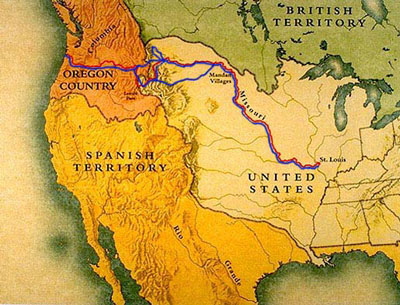
So I appreciated this recent piece in Defector by Craig Fehrman, author of a new book on the Lewis and Clark expedition: “The Hardest Part of History to Tell is How It Felt.” While working on the book, Fehrman was randomly attacked by a dog on an evening walk, resulting in horrific injuries and months of recovery. It made him feel an unexpected closeness to members of the expedition, who also experienced animal attacks:
To me, the animal attack felt so brutal, so irrational, so life-changing. But to Lewis and Clark and their men, it was just a Saturday.
I mean this literally: On Saturday, July 26, 1806, a wolf attacked a few of the soldiers. It bit one man “through his hand,” in Clark’s words, before another soldier shot and killed it.
“This animal,” Clark wrote in his journal, “was so vicious.” But that’s all he said. No one else even mentioned the incident.
Fehrman could understand the physical effects of the violence the company endured in a new way. But their emotional landscapes continued to elude him:
The dog attack reminded me to pay attention to bodies. It reminded me to pay attention to minds. But it also reminded me that, no matter how hard I tried, I would never be able to access fully the bodies and minds that survived this expedition. We all shared a certain neurochemistry—Lewis’s and Sacajawea's hearts raced, too. But their world was so different from mine. Our ideas were different. Our values were different. Our material realities were different. I could get antibiotics if I needed them. I could try EMDR.
Read the whole piece, and buy the book!
My writing
I wrote a news story for Science about a big study of modern and ancient Indigenous South American genomes. Because South America was the last continent to be settled, researchers used to think its population history would be boring. Spoiler alert: It’s not boring! And there are still so many mysteries to be solved, like whether the signature of third migration is real; if it is, where the newcomers came from; and what’s up with that small proportion of Australasian ancestry that’s held steady for 10,000 years?
Read my story here


Add a comment: